
How to Make Your RV or Travel Trailer Off-Grid (Without Spending $30,000)
By Shane, founder of ROA Off-Road
I’ve been camping my entire life, and I’m going on 18 years at ROA Off-Road. In all that time, the number one thing I see replaced on campers is batteries.
Most of those batteries weren’t bad. They died because nobody told the owner of the RV how to take care of them. Nobody hands you a manual that says here’s what runs off your battery, here’s what doesn’t, and here’s how to keep it alive.
So that’s what this is. If you don’t own a travel trailer or RV yet, this will help you learn what to look for. If you already own one, you’ll learn how to upgrade it. A lot of this you can do yourself this weekend.
By the end, you’ll know how to keep your batteries alive and how to camp with no hookups.
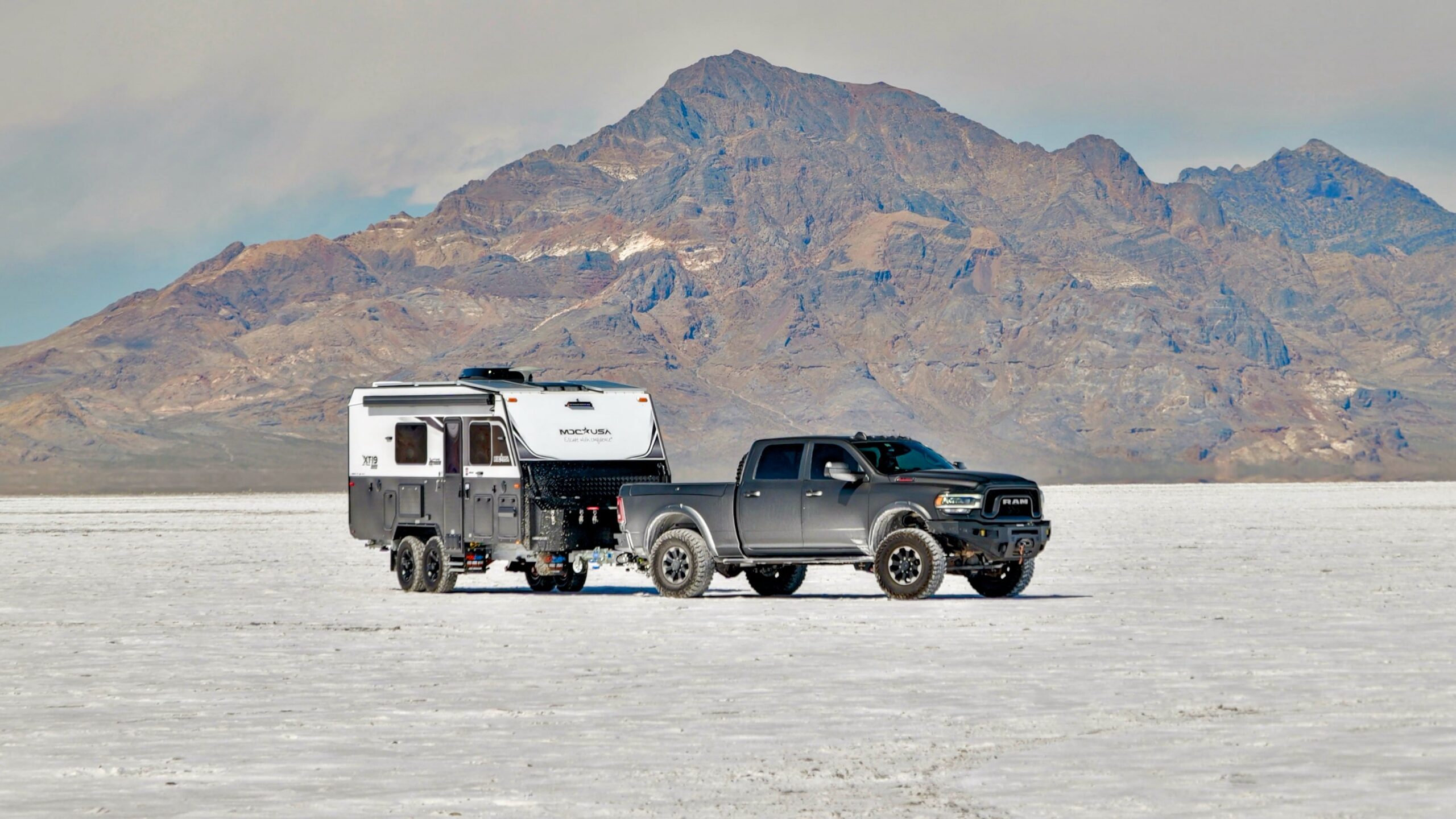
Traditional Travel Trailer vs Off-Grid Travel Trailer
Most travel trailers and RVs in America are built to plug in to work properly. The air conditioner, the microwave, the TV, and the wall outlets all want shore power. So where do you end up? At a crowded campground, paying a nightly fee for a spot, packed in next to your neighbor’s screaming kids or loud TV. We call it “trading neighbors” here at ROA.
That is not meant to trash on campgrounds. Nothing wrong with campgrounds. But if that’s the only place your travel trailer works, it may not quite feel like camping.
An off-grid travel trailer doesn’t need hookups. No shore power, no city water. It takes care of itself. No neighbors, and you can camp almost anywhere.
One thing most people may not realize: off-grid and off-road are not the same thing. You can be off-grid in a Walmart parking lot. Plenty of Yellowstone campsites are paved and still off-grid, because there’s nothing to plug into. Off-grid is about power. Off-road is about where you drive. This blog post is about power.
Start With the Battery
Everything starts here. Solar, inverters, all of it. If you don’t understand your battery, nothing else works.
There are three main types. Good, better, best.
Good: Flooded Lead Acid
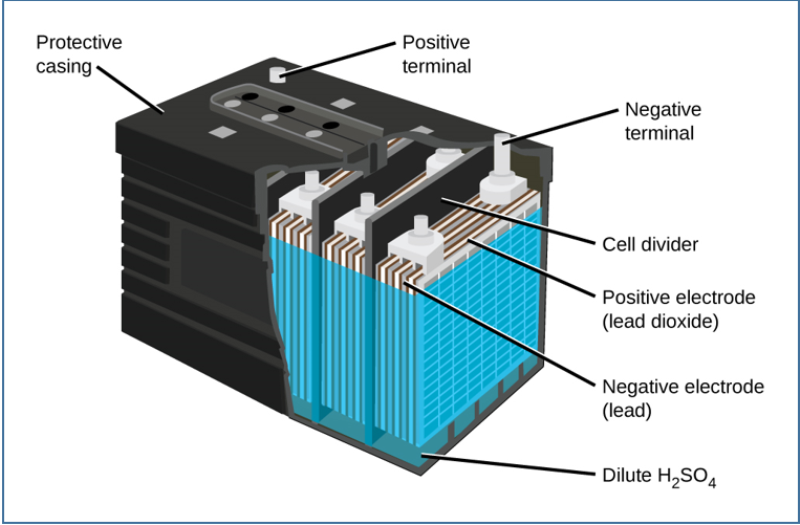
This is what almost every travel trailer or RV comes with. It usually sits up front on the tongue, and most new trailers come with one or two.
- Cost: about $80 to $200 each (80-100amps)
- Needs maintenance: check the water and top it off with distilled water
- Gives off gas, so it has to live outside or in a vented box
- You can only use about half of its total power (50%)
- Lasts about 2 to 5 years (If you are lucky and know how to maintain perfectly)
- About 300 to 500 total cycles
A cycle is one drain and one recharge. A weekend of camping is usually one to three. At 50% depth of discharge, a flooded lead acid battery is good for roughly 300 to 500 cycles.
Three things kill these batteries.
- Draining them too low. Lead acid batteries should not be discharged below 50% if you want them to last. Go past that a few times and the battery will retire early.
- Letting them sit. Your trailer uses power even when it’s parked. The house battery feeds the propane leak detector and small things like the radio. The LP detector alone typically pulls a little over 1 amp, which is enough to drain a battery in a few weeks. Park it all winter with nothing charging it, and the battery is dead by spring. That’s doesn’t mean it was a bad battery. It is a battery that wasn’t maintained properly.
And here’s the part almost nobody knows. Even with the battery disconnect switch flipped, things like the propane detector and stereo memory are usually still live and drawing from the battery. These are called “phantom draws”. The propane detector is wired around the cut-off switch on purpose, per RV industry spec. So the disconnect switch helps, but it does not completely shut off all power. If you’re storing it without a charger, pull the negative cable or keep a charge coming in.
3. No water. The water inside evaporates. Check it a few times a year.
The fix for all three: always keep a charge coming in. Plugged in at home, a trickle charger, or solar panels. For lead acid and AGM, the number one killer is sulfation from chronic undercharging or sitting in a discharged state.
Want to know how full your battery really is? The little light panel in most trailers isn’t very accurate. A cheap voltmeter tells the truth. A fully charged 12 volt flooded battery reads about 12.7 volts at rest. At 50% it reads about 12.1 volts. That’s your stop line. Measure it after it’s rested a couple of hours, because a battery straight off the charger will read high for a while.
Better: AGM or Gel
Same size, same idea, but sealed.
- Cost: about $200 to $400 each
- No maintenance, no water ever
- No gas, so it can go inside the trailer
- Charges fine in cold weather
- Still use only about half of its total power
- Lasts about 4 to 7 years
- About 500 to 1,000 cycles
AGM stands for Absorbent Glass Mat. Fiberglass separators hold the acid instead of letting it slosh around, so there’s no watering, no gas venting, and you can mount it in any position. If you know you’ll never remember to check the water, you likely have this battery.
One real advantage for cold climates: AGM batteries can be charged below freezing, which lithium cannot do. If your trailer sits outside all winter with a solar panel on it, that matters.
Inside, AGM is still lead acid. Same 50% limit, same weight, similar lifespan. Expect about 4 to 7 years from AGM in normal RV use. For most trailers, pick AGM over gel. Gel is pickier about how it gets charged. Most trailers can swap straight to AGM. Just make sure your converter has an AGM setting.
Best: Lithium
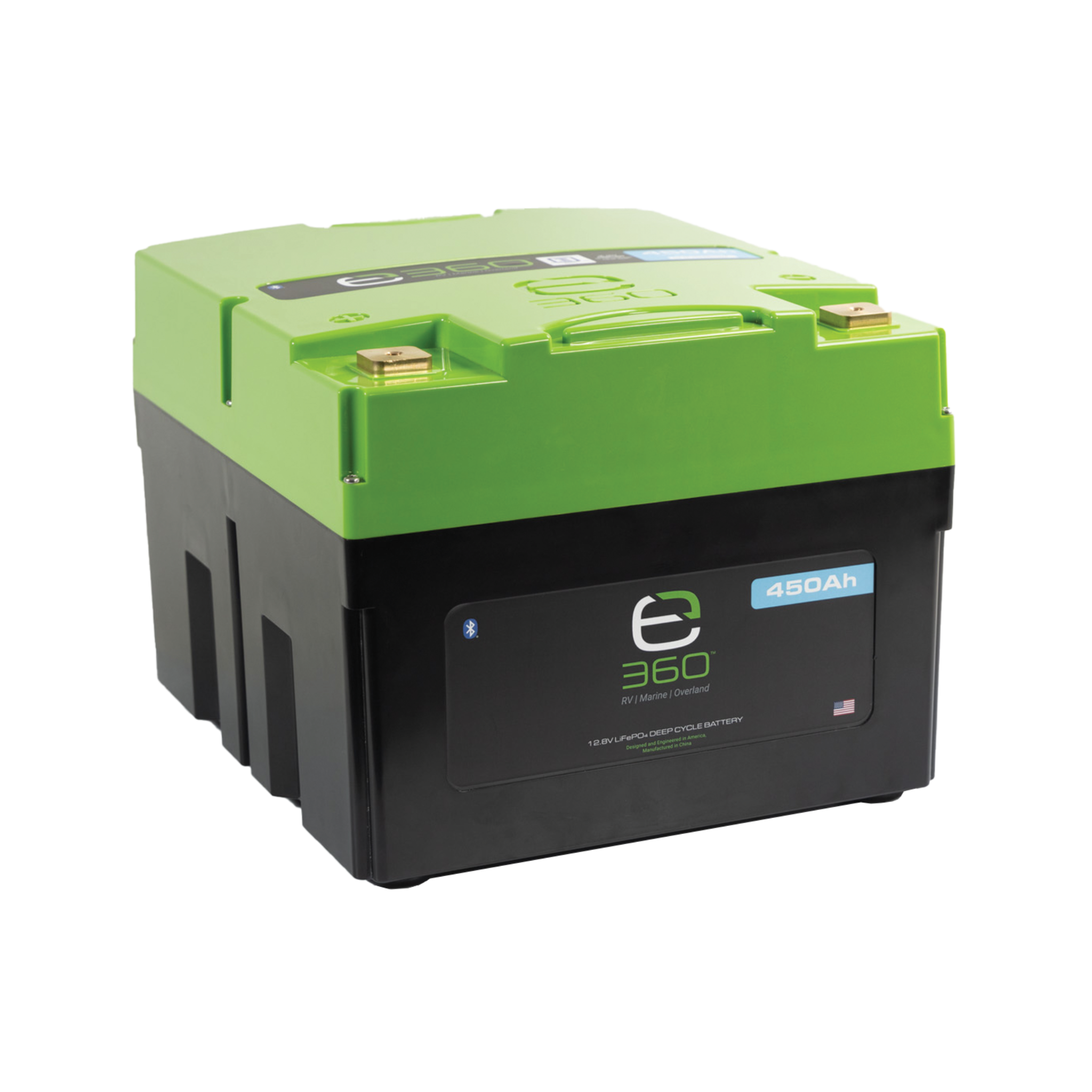
Specifically lithium iron phosphate, written LiFePO4. That’s the safe kind built for trailers. It’s not the same chemistry as the lithium in phones and cheap scooters that you hear horror stories about.
- Cost: about $600 to $1,200 each
- No maintenance, safe inside
- You can use 80 to 100% of it, so one lithium does the work of two lead acid
- About half the weight
- Lasts about 8 to 10 years or more
- About 2,000 to 5,000 cycles
Lead acid batteries last longer when kept above about 50%, while LiFePO4 handles deep cycling much better and is commonly run at 80 to 100% depth of discharge. That’s the whole I prefer lithium. Half the capacity of a lead acid battery is usable. Almost the entire capacity of the lithium battery is usable.
You save 30 to 40 pounds per battery, and AGM runs 60 to 70 pounds per 100 amp hours. If your battery lives on the tongue, that weight matters.
Lithium runs about 2,000 to 5,000 cycles at 80% depth of discharge, with a calendar life of 10 to 20 years. In real RV use, expect 8 to 10 years or more.
Yes, it does cost more up front. But if a lead acid lasts 2 to 5 years and a lithium lasts 8 to 10, do the math over 10 years.
Every reputable lithium battery includes a built-in Battery Management System, or BMS, that handles cell balancing, overcharge protection, and temperature monitoring automatically. That’s the computer inside that keeps it safe.
Two things to know before you buy:
- Most lithium batteries can’t charge below freezing. Most LiFePO4 batteries cannot safely accept a charge when the internal cell temperature is below 32 degrees. Forcing a charge causes lithium plating, which permanently damages the battery. That’s why a smart BMS cuts off charging in the cold. It’s not a failure, it is protection. The temperature range printed on the battery usually only applies to discharging, not charging. So your solar panel can be in full sun on a freezing morning and nothing goes into the battery. If you camp or store your trailer anywhere it freezes, buy a heated lithium battery. If it doesn’t say self-heating on the box, don’t buy it for cold weather.
- Your charger needs a lithium setting. Flooded, AGM, gel, and LiFePO4 batteries do not charge the same way, so use the correct charger profile. That includes your converter and your solar controller. Charge lithium like lead acid and you won’t get what you paid for.
All Three Side by Side
| Good: Lead Acid | Better: AGM/Gel | Best: Lithium | |
| Cost each | $80 to $200 | $200 to $400 | $600 to $1,200 |
| Maintenance | Add water | None | None |
| How much you can use | About 50% | About 50% | 80 to 100% |
| Charges below freezing | Yes | Yes | No, unless heated |
| Lifespan | 2 to 5 years | 4 to 7 years | 8 to 10+ years |
| Cycles | 300 to 500 | 500 to 1,000 | 2,000 to 5,000 |
Every one of these will get you camping. The question is how much you want to think and worry about your battery.
What Solar Actually Does
People call us all the time and ask: does the air conditioner run off the solar? Does the fridge? Can I run the microwave off the solar?
Almost everyone thinks this, and it’s backwards.
Solar doesn’t run anything in your trailer. Solar collects power and stores it in your battery. Everything in your trailer runs off the battery. The solar just recharges the battery.
Think about it. The sun isn’t pushing electricity through the air. If it were, we’d all be walking around getting electrocuted. A panel has to catch the sunlight and turn it into power, and that power has to go somewhere.
The Four Boxes

Image provided by Battleborn, explaining how a solar system works.
Every solar system in the world works the same way. Your house, a cabin, a trailer.
Solar panel → Charge controller → Battery → Your trailer
The panel catches the sun. The charge controller takes the power the panels collect and regulates it before sending it to your batteries. Panels can put out high voltages, and your batteries run around 12 volts, so the controller steps that down and protects the battery from overcharging. That’s the brains. The battery stores it. Your trailer runs off the battery.
Remember those four boxes and you understand solar better than most people selling it.
How Much Does a Panel Actually Make?

A 100 watt panel does not make 100 watts all day. The wattage on the label is measured under standard test conditions, which is perfect sunlight at 77 degrees. Real world conditions rarely match that.
The number that matters is peak sun hours. One peak sun hour equals one hour of full-strength sun. A place with 10 hours of daylight might only have 5 hours strong enough to hit rated output. Phoenix averages about 6.5 peak sun hours. Seattle averages about 3.5.
A well-known RV rule of thumb is that a 100 watt panel makes about 30 amp hours a day in decent conditions. For a weekend of using lights, the water pump, and fans, that often keeps you even. It will not keep up with a 12 volt fridge by itself. A 100 watt panel in 5 peak sun hours makes about 500 watt hours, and a 12 volt camping fridge alone can use 600 to 720 watt hours a day. Two 100 watt panels handle most weekend setups.
Briefcase Panel or Roof Panel?

A briefcase panel folds up like a suitcase. You set it on the ground, point it at the sun, and clip it to your battery. Nothing to install. Big advantage: park your trailer in the shade and set the panel out in the sun. The downside is you have to set it out, put it away, and keep an eye on it.
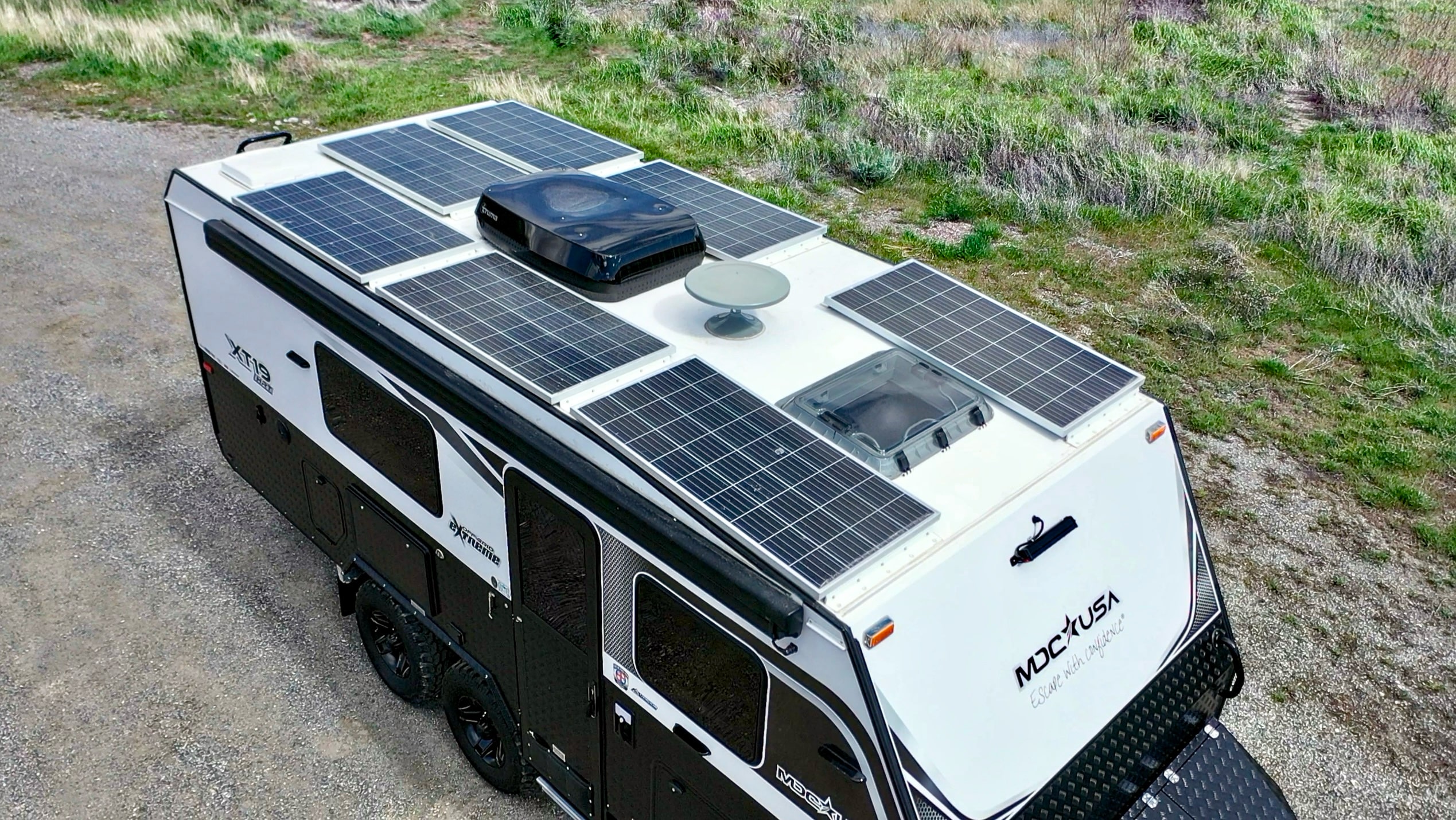
A roof panel is wired straight into your batteries. It charges while you drive, while you camp, and while it sits in your driveway. Nothing to set up, nothing to forget at camp. The trade: it only gets sun where you park. Park under a tree and it gets almost nothing.
A lot of people end up using both.
Not All Solar Panels Are the Same
Online, you’ll find solar panels for $100 and solar panels for $1,000. Both can say 100 watts on the label. They’re not the same.

Example of a “stick on” solar panel
Look for four things:
- Monocrystalline cells. The most power in the least space.
- Tempered glass on top. Glass lasts and doesn’t cloud up.
- An aluminum frame. Rigid panels are built to handle heavy snow, high wind, and hail, and most come with a 25 year power output warranty.
- A real company with a real warranty. Go with brands with good reputations, not cheap Amazon knock-offs.
Now, the stick-on flexible panels with no glass. They have their place on curved roofs, but here’s the honest truth. Rigid panels win on efficiency (21-24% vs 16-21%), lifespan (25 to 30 years vs 15 to 20), and heat, because glass panels sit on brackets with airflow underneath. Flexible panels glued to a roof get no airflow under them and get very hot. Hot solar cells perform worse, and the plastic surface can degrade and cloud up over time. Expect 5 to 10 years from a flexible panel compared to 25 plus from rigid glass.
Glass panels sit up off the roof, air flows under them, they stay cooler, and they make more power.
Never Hook a Panel Straight to a Battery
Say you buy the cheapest panel you can find. It has two wires. You clip them right onto your battery.
That’s a quick way to overcharge and kill a battery.
A solar panel without a charge controller is not a solar system. Nothing is telling it when to slow down or stop, so it overcharges the battery and ruins it.
When you shop, check the listing. Some panels come with a charge controller built-in. If it doesn’t say charge controller included, it isn’t included.
PWM vs MPPT Solar Charge Controllers
There are two kinds of charge controllers: PWM and MPPT. You don’t need to know what the letters mean.
A PWM is a tube TV. An MPPT is a smart TV. Both get you TV. But nobody wants a dumb TV.
A PWM controller is basically a switch that connects the panel to the battery, and it pulls the panel’s voltage down to match the battery. An MPPT controller adjusts its input to harvest the maximum power from the panel, then converts it to what the battery needs. That gets you 15-30% more real-world energy from the same panels. In one week-long side by side test, the MPPT harvested 27% more than a PWM on identical panels, and over 30% more on partly cloudy days.
On a small setup under 200 watts with a 12 volt panel matched to a 12 volt battery, a PWM runs at 85 to 92% efficiency, close enough to MPPT that the extra cost is hard to justify. A quality PWM costs about $35 to $60 and a comparable MPPT about $120 to $180. So if you’re buying one briefcase panel with a PWM built in, that’s fine. Once you go to roof panels or more than one panel, get MPPT. With 400 watts of solar, a PWM is effectively throwing 100 plus watts in the trash.
Many MPPT controllers also connect to your phone and show you exactly what your panel and battery are doing. That’s how you can monitor for things like a shaded panel, a bad connection, or a wrong setting.
The Easiest Way to Go Off-Grid This Weekend
- Keep the batteries you already have.
- Buy a briefcase panel with the charge controller built in.
- Clip it to your battery.
That’s it. Your trailer is now off-grid capable. And remember how we started? Batteries die because they don’t get a charge. With this set up, you have charge always coming in. You stop replacing batteries every year.

The Other End: Full Roof Systems
We’ve built roof systems here at ROA with 1,400 watts of solar covering the whole roof, wired into a big lithium battery bank. That trailer can sit for months with full batteries.
If you’re buying lithium batteries, my honest recommendation is roof solar. The charge controller keeps those batteries topped off and healthy, and that’s how you get the full 10 years or more. Two things to remember. Buy the heated lithium, because solar can’t charge regular lithium batteries below freezing. And sweep off the snow. Buried panels don’t charge.
Are You Fully Off-Grid Yet?
You’ve got batteries, a solar charge controller, and solar panels. Are you completely off-grid?
Not yet.
Your house runs on 120 volt power. Your trailer battery is 12 volt. Different power.
The good news is your trailer already does a lot on 12 volts, right out of the box. Overnight basics like LED lights, the water pump, phone charging from the DC ports, and the safety detectors do not need an inverter. Most trailer fridges, the fans and vents, and the furnace fan run on 12 volts too. So you already own a partly off-grid trailer. Most people just don’t know where the line is.
What doesn’t run? Anything that plugs into a wall outlet. The microwave, the TV, a blow dryer, the air conditioner. Even your laptop charger. Plug it into a trailer outlet with no hookups and nothing happens. Those outlets are dead.
To fix that, you need one thing that turns 12 volt into 120 volt.
An inverter.
Good, Better, Best Inverters
Good: a small plug-in inverter. About $20 to $100. It plugs into the 12 volt socket or connects to the battery, gives you one or two outlets, and you run an extension cord.

On one trip I bought one of these at Walmart, hooked it to the battery, and ran a cord up to the TV. We unplugged and replugged it the whole trip.
Was it pretty? No.
Did we get movie night off-grid? Absolutely.
Know the limit on the plug-in kind. The 12 volt socket is protected by a fuse, usually 15 or 20 amps. At 12 volts, a 15 amp fuse allows about 180 watts, and a 20 amp fuse about 240 watts. That works out to roughly 150 watts of usable AC power out of the socket. A phone, a laptop, a small TV. Do not use a plug-in cigarette lighter inverter for kettles, heaters, hair dryers, microwaves, or large tools. Anything bigger goes straight to the battery.
Better: a hardwired inverter. About $300 to $800 installed. It’s mounted inside the trailer and wired to a few outlets, usually the TV and one kitchen outlet. Flip a switch and those outlets work off the battery. No cords.
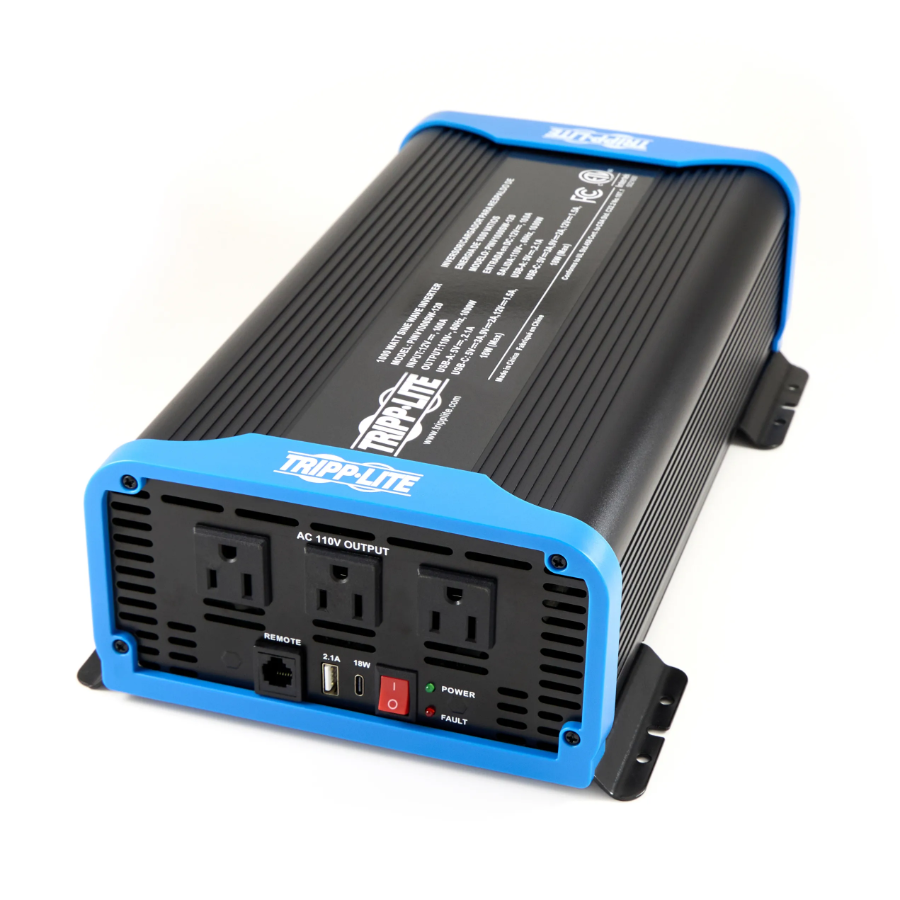
Best: a full inverter on the whole breaker panel. About $2,000 to $5,000, plus batteries. Every outlet in the trailer works off-grid, including the microwave and even the air conditioner if the system is big enough. Running an RV air conditioner from solar is possible, but it’s mainly a battery problem, not a panel problem. Panels refill during the day, but the battery has to cover startup surges and nighttime runtime. If AC is the goal, plan the battery bank first.

Here’s why the big ones need real wiring. A 2,000 watt inverter at full load pulls about 167 amps from a 12 volt battery. That takes very heavy cable and a 200 amp fuse within 18 inches of the battery’s positive terminal. This is not an extension cord job.
When you shop, look for the words pure sine wave. Modified sine wave inverters make a rough, choppy version of AC power. Pure sine waves make
the smooth, continuous wave your electronics expect. If you’re running laptops, smart TVs, CPAP machines, or anything with a microprocessor, pure sine wave is the way to go. Microwaves on modified sine wave often run at reduced power, sometimes 50% lower, so you cook twice as long and still get mediocre results. If you’re unsure whether a device needs pure sine wave, assume it does. The price gap no longer justifies risking equipment that costs more than the inverter.
Do This Before Your Next Trip
- Buy an inexpensive inverter, pure sine wave if you can.
- Bolt it to your battery posts with ring terminals.
- Put a fuse on the positive cable close to the battery (most decent kits include one).
- Run an extension cord to what you want to power.
Use ring terminals, not clips. An inverter pulls far more current than a solar panel does. Clips get hot and fall off. Bolt it down.
How Much Does Off-Grid Cost?
Anywhere from a couple hundred dollars to $30,000.
Here’s what I want you to know: every step of that ladder gets you camping. A briefcase panel and a Walmart inverter is still a real off-grid setup. So is the $30,000 build. You don’t need to start at the top. Start where you are.
If you want to run your air conditioner off-grid someday, it comes down to how many batteries, how big an inverter, and how many outlets you want to convert. More work and more money, but almost any trailer can get there.
The Short Version
- Most batteries die from neglect, not because they’re bad. Keep a charge coming in.
- Your disconnect switch probably doesn’t cut the propane detector. If you’re storing without a charger, pull the negative cable.
- Lead acid is good, AGM is better, lithium is best. Buy heated lithium if it gets below freezing where you camp.
- Solar doesn’t run your trailer. It refills your battery.
- Panel, charge controller, battery, trailer. Never skip the controller.
- One small panel, PWM is fine. Roof panels or more than one, get MPPT.
- Glass panels outlast and outperform stick-on panels.
- Your trailer already runs a lot on 12 volts. An inverter handles the rest.
- Plug-in inverters top out around 150 watts. Anything bigger goes to the battery with a fuse.
- Buy pure sine wave inverters.
- Start where you are.
Want Help?
Roof solar, inverters, and full off-grid systems are what we install every day at ROA Off-Road. If you want yours done right, stop by any of our Experience Centers in Utah, Arizona, Colorado, or South Carolina. We sell the Best off-grid travel trailers and RVs in America but if you want to make your travel trailer or RV one of the best off-grid systems we are your one stop.
But you don’t need us to get started. A briefcase panel and a small inverter will get you off-grid this weekend.
And don’t go alone. Join the Roamer community on Facebook, and come camp with us at the next Roamer Rally or on a Roamer Adventure. That’s where you’ll learn more than any blog can teach you.