Off-Grid Camping Near Phoenix: 6 Desert Season Spots Within 3 Hours
The rest of the country is hunkering down for winter. Phoenix camping season is just getting started.
From late October through April, the valley’s backyard turns into some of the best off-grid camping in the West. Cool nights, warm days, and a lot of public land. If you’ve spent the summer planning trips into the desert, this is a great read for you.
Here are six spots for off-grid camping near Phoenix, all within about three hours of our Mesa Experience Center, with the honest details on roads, rules, and the best months to go.
Why Desert Season Is Arizona’s Best-Kept Secret
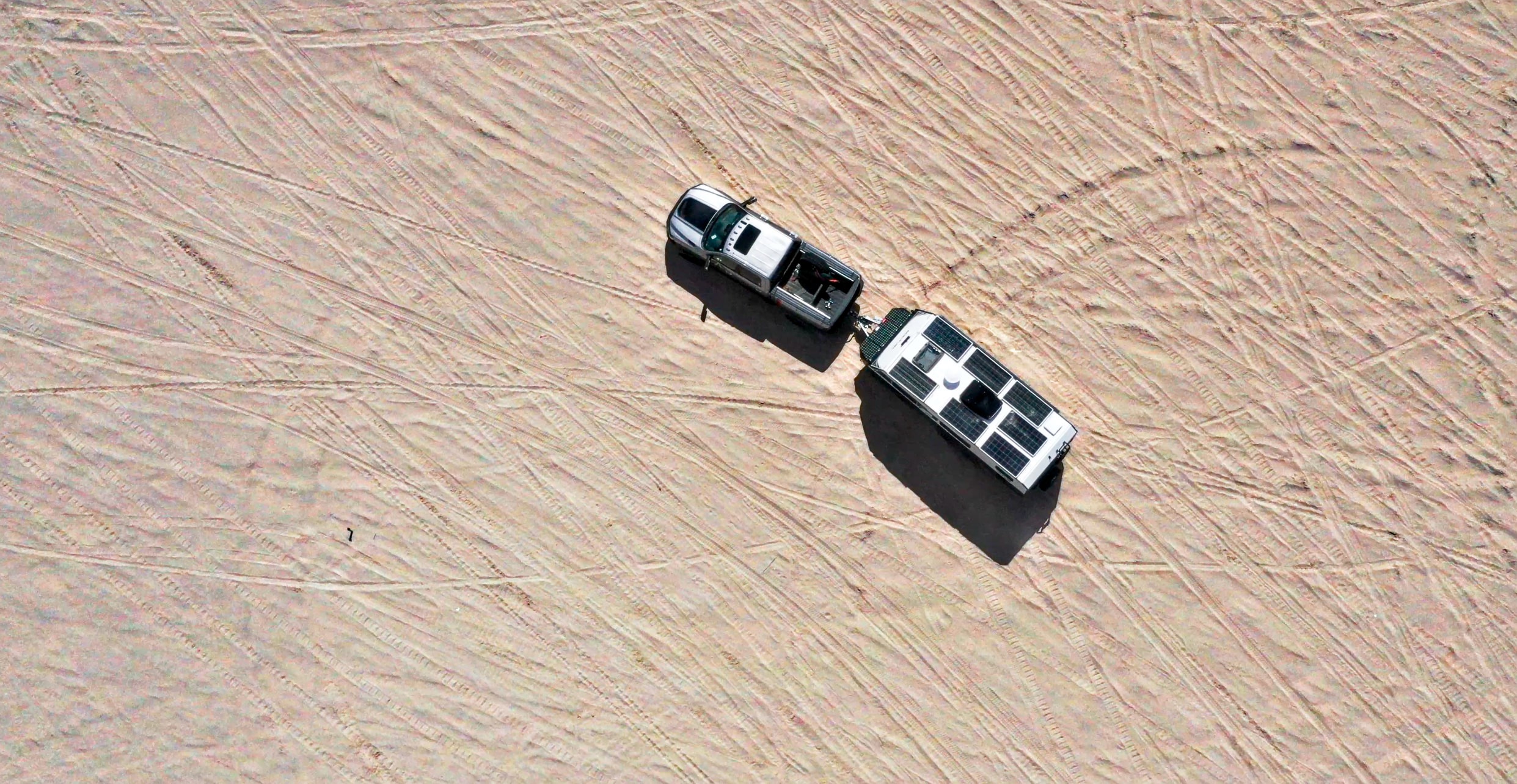
When the valley drops out of triple digit heat, the Sonoran Desert opens up. You can wake up to a saguaro forest an hour from your driveway, spend a weekend under skies dark enough to see the Milky Way, and be back for work Monday. No reservations. No neighbors.
The catch is that desert camping requires you to show up prepared. Roads can wash out. Cell service disappears. Water is a limited resource. That’s exactly why the right trailer matters here, and why a little homework before you go makes the difference between a great weekend and a long, exhausting tow home.
6 Spots for Off-Grid Camping Near Phoenix
Drive times are approximate from Mesa. Rules change, so check the land manager’s alerts page before every trip.
1. Four Peaks Road, Tonto National Forest (about 50 minutes)
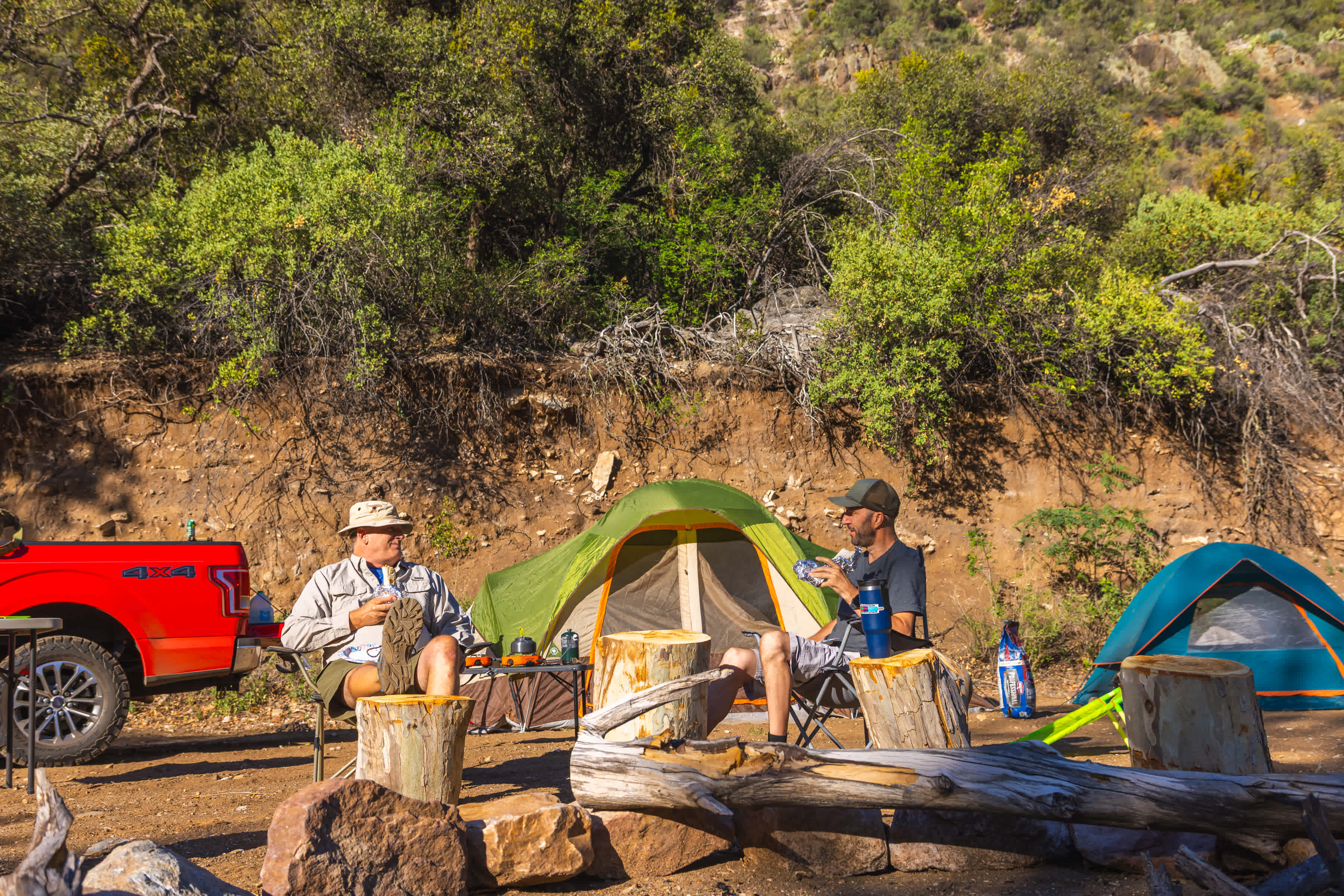
Camping in Tonto National Forest provided by HipCamp.
You’ve seen Four Peaks from the valley your whole life.
Tonto National Forest allows dispersed camping in most areas, and you don’t need a Discovery Pass to camp here (that pass covers day-use sites). The road starts off SR 87 and gets to washboard roads quickly. Stay on the lower stretch of FR 143 or along FR 401 toward Cottonwood with a trailer, and save the upper road for high clearance and dry weather. Skip it entirely after it rains.
Best months for camping here: October through April, with snow possible up high in winter.
2. Sonoran Desert National Monument, Vekol Road (about 1 hour 15 minutes)
Vekol Valley Road Camping | Stanfield, Arizona provided by The Dyrt.
This is the classic valley boondocking weekend. Take I-8 to exit 144 and the saguaro forest starts almost immediately.
Dispersed camping is allowed across the monument unless posted, free, with a 14-day limit in any 28 days. The first few miles of Vekol Road are graded and friendly to bigger trailers. Past that, BLM says roads are mostly unmaintained and some need high clearance or four-wheel drive. There’s no cell service, and BLM advises caution in the monument’s southern portion, so let someone know your plans.
Best months: late October through mid-April.
3. Mogollon Rim Road, FR 300 (about 2 hours)
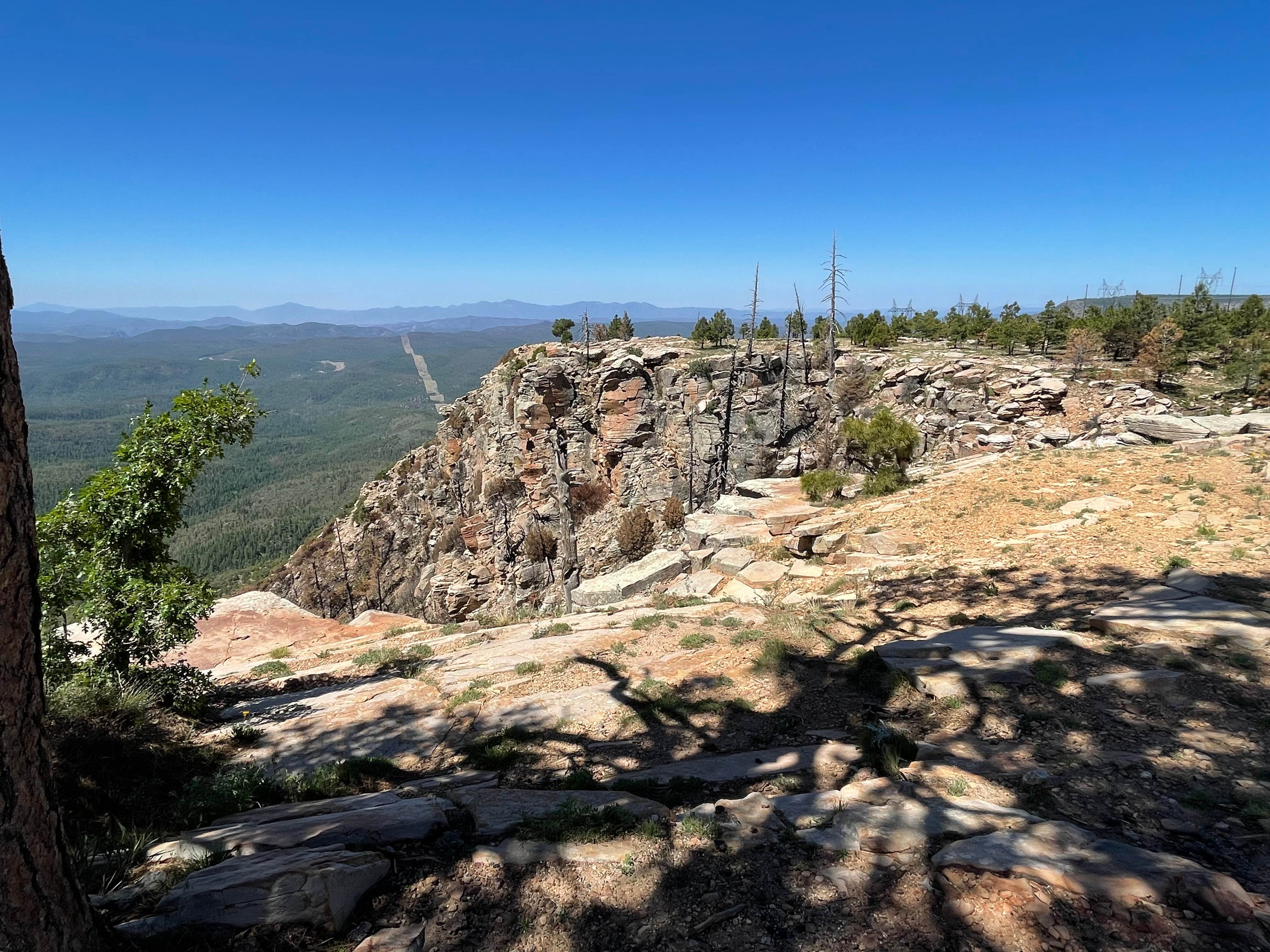
Dispersed Camping – Rd 6107 near Mogollon Rim | Pine, Arizona provided by The Dyrt.
This one has a short window, and that window is right now.
The Rim sits around 7,000 feet, so it’s cool pines and big views out over the Tonto Basin while the valley is still warm. The western stretch on the Coconino National Forest allows dispersed camping. Farther east near the Rim Lakes, on the Apache-Sitgreaves, camping is limited to numbered “Camp Here” sites. The road is graded dirt and fine for trailers when dry.
Best months: September and October. After that, the cold moves in and you head back to the desert.
4. Quartzsite: La Posa LTVA, Dome Rock, and Scaddan Wash (about 2 hours 15 minutes)
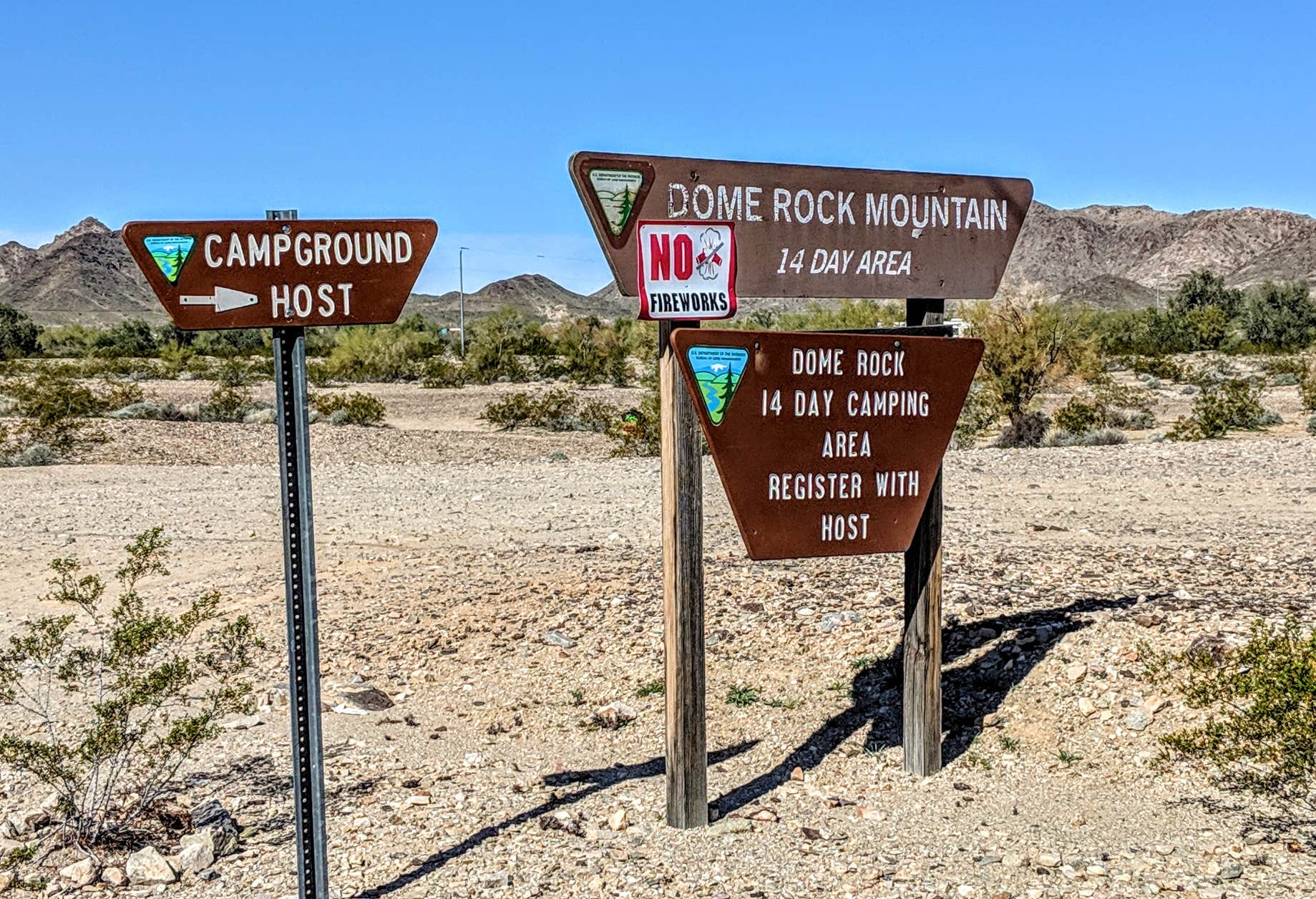
Dome Rock Road BLM Dispersed Camping Area | Quartzsite, Arizona The Dyrt.
Quartzsite is the winter capital of boondocking, and for good reason. Easy access off I-10 and thousands of acres of open desert.
La Posa Long Term Visitor Area runs September 15 through April 15, with a $40 permit for 14 days or $180 for the season, and it has a dump station, water, and vault toilets. If you’d rather camp free, the BLM areas at Dome Rock and Scaddan Wash are nearby with a 14-day limit. January gets busy when the big RV show is in town, so go in November or February if you want quiet.
Best months: November through March.
5. Ajo: Darby Well Road and Organ Pipe Cactus National Monument (about 2 hours 30 minutes to 3 hours)
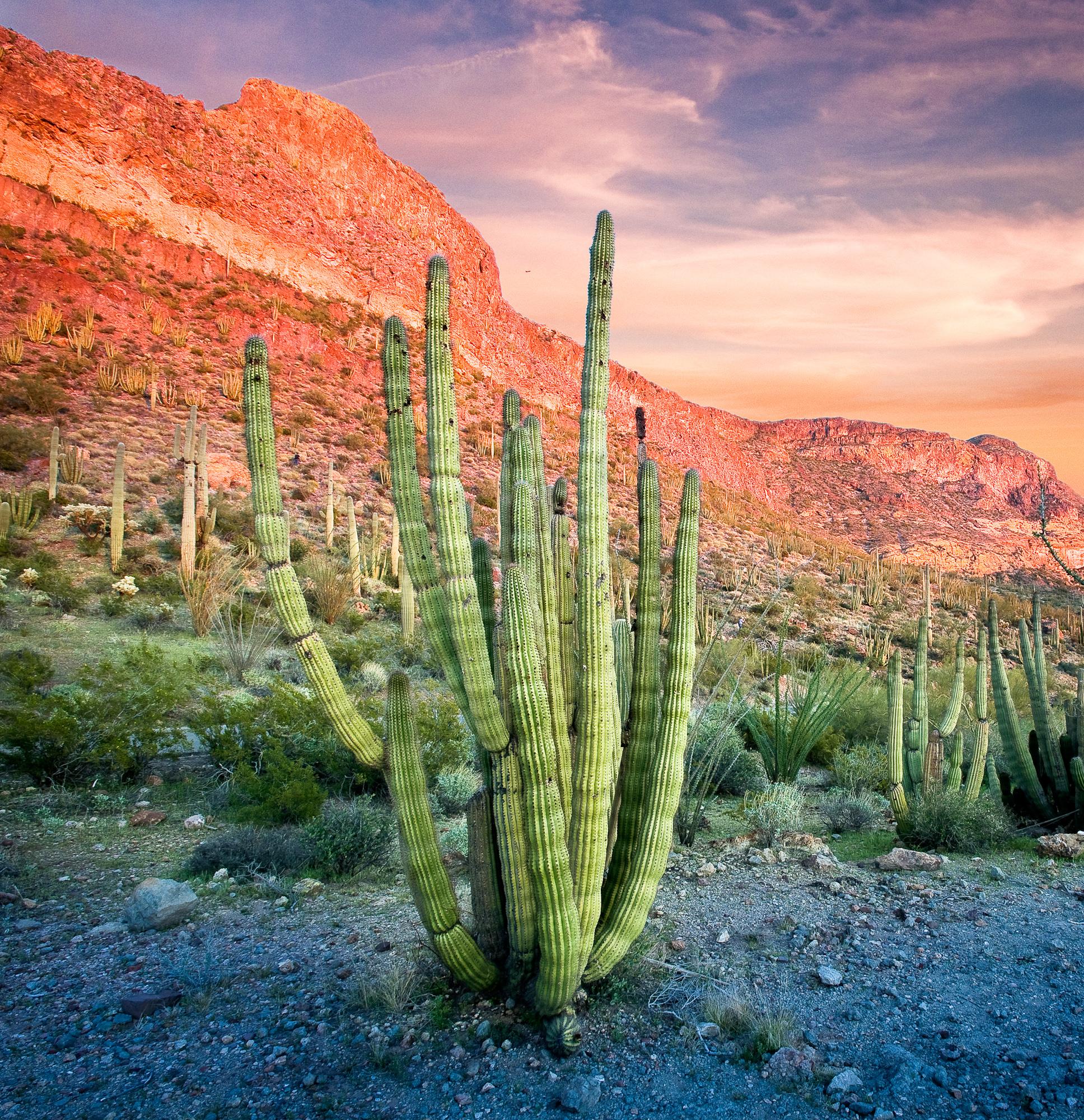
Ajo is where the desert gets quiet. BLM land along Darby Well Road offers free dispersed camping on a washboard road that’s worth the rattle.
If you want a campground night, Organ Pipe’s Twin Peaks Campground is south of Ajo. It’s $20 a night plus the park entrance fee, it takes reservations, and a handful of sites fit rigs up to 45 feet. The organ pipe cactus stands are the reason to go. You won’t see them like this anywhere else in the country. One note: Organ Pipe’s Alamo Canyon campground is tent-only, so plan on Twin Peaks with a trailer.
Best months: November through March.
6. Kofa National Wildlife Refuge, Palm Canyon Road (about 2 hours 45 minutes)

Kofa is for the person who wants to feel far away. Rugged mountains, desert bighorn sheep, and a hidden canyon of native California fan palms.
Primitive camping is free with a 14-day limit in any 12 months. Stay within 100 feet of a designated road and at least a quarter mile from any water source, since that water belongs to the wildlife. Most of the refuge is wilderness and closed to vehicles, and many roads are four-wheel drive only. Palm Canyon Road is the trailer-friendly choice when it’s dry.
Best months: November through March.
What About Bulldog Canyon, Sedona, and Table Mesa?
You’ll see these on older lists. Here’s why they’re not on ours.
Bulldog Canyon is 30 minutes from Mesa, but a Tonto National Forest order that took effect in January 2026 closed camping near its staging areas and along First Water Road through 2031. It’s still a day trip on the OHV routes with a permit, but not a camping spot.
Forest Road 525 near Sedona changed in August 2026. Camping there is now limited to eight designated areas, and wood and charcoal fires are banned year-round. It’s still beautiful. Just go knowing it’s designated sites, not open dispersed camping.
Table Mesa Road is busy with technical 4×4 traffic and target shooting, and BLM has a plan to move camping into designated sites and a new campground. We’d wait until that settles.
The Rules That Apply Almost Everywhere
– 14 days, then move. BLM land generally allows 14 days in a 28-day period. Some areas differ, so check the posted rules.
– State Trust Land needs a permit. Arizona State Trust Land looks like public land but requires a recreational permit ($15 individual, $20 family).
– Pack it in, pack it out. All of it.
– Check fire restrictions every trip. They usually lift after monsoon and return in spring. Each forest and BLM office posts current alerts.
– Bring more water than you think. And tell someone where you’re going. A lot of these spots have no cell service.
Getting Out There With the Right Setup
Desert season asks a lot of a trailer. Washboard roads that shake conventional RVs apart. Sandy washes. Cold nights after warm days. Days, not hours, between water fill-ups.
That’s the kind of camping our trailers are built for, and it’s the kind our Mesa team does themselves. If you’re new to going off-grid, our guide on (https://www.rvsofamerica.com/how-to-camp-off-grid) covers the basics.
And it doesn’t end when you drive away. Roamers have a tech line to call from the campsite, most problems get solved over the phone, and the Mesa Experience Center is here all season if something needs hands-on attention.
Ready for Desert Season?
Call or text the Mesa team at 480-746-4990 and tell us which spot on this list you want to wake up at first. We’ll tell you honestly what it takes to get there with your truck, and which trailer fits the trip.
Want to see them in person first? Stop by at 7602 E Main St, Unit 5, in Mesa. We’ll have one set up with the roof up and every system running.